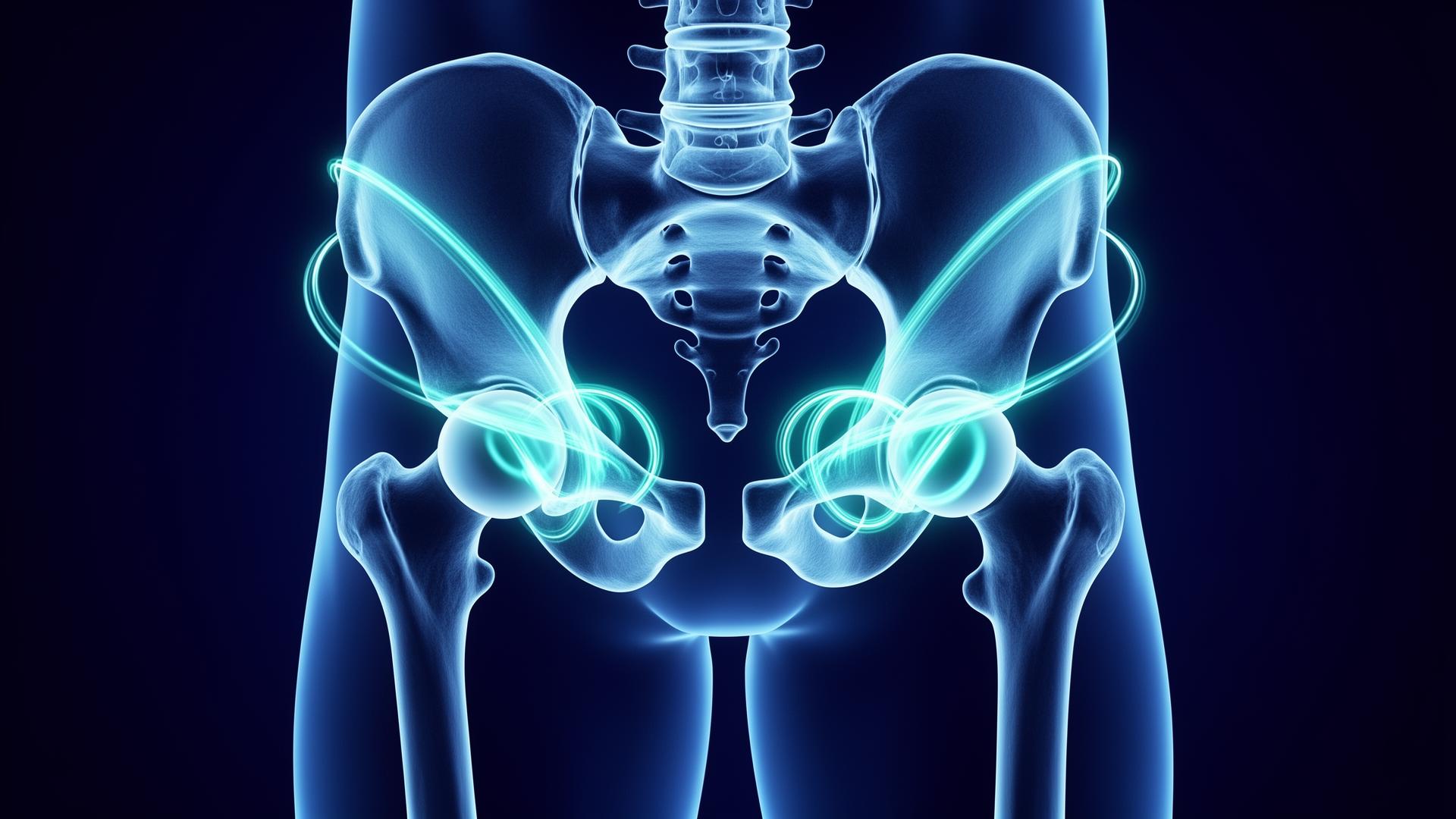
Hip pathology in runners almost always traces back to a load management problem rather than a single faulty movement. When weekly volume outruns tissue capacity — or when a sudden surface, footwear, or pace change concentrates load on the anterior hip — internal rotation deficits, deep squat asymmetries, and end-range capsular stiffness become symptomatic. The goal of the program below is not to chase a number on a goniometer but to expand the runner's usable hip range under load and to do it without flaring an irritable joint.
Each of the five drills targets a specific component of hip kinematics: internal rotation, gluteal mobility, capsular distraction, deep flexion with abduction, and eccentric hip flexor capacity. Programmed together they address most of what a recreational or competitive runner with FAI symptoms or early labral irritation is missing. They are deliberately low-cost, equipment-light, and quick enough to fit into a warm-up or cool-down without displacing actual training volume.
1 · 90/90 hip switches for internal rotation
Internal rotation is the rate-limiting motion in nearly every hip-restricted runner you will see. The 90/90 switch trains end-range internal rotation actively and reciprocally, which carries over to single-leg stance phases of running far better than passive stretching. Set up seated with one hip in external rotation and the opposite in internal rotation, both knees at ninety degrees. Drive the trail knee toward the floor without letting the pelvis collapse, then rotate to the opposite side under control. Slow, paused reps in the bottom position outperform fast switches for capsular adaptation.
Two to three sets of six to eight reps per side, holding the end position for two seconds, is enough to drive change without flaring an irritable joint. Cue the runner to keep the chest tall and the contralateral glute active to prevent lumbar substitution, which is the most common compensation and the reason this drill often fails to produce carryover when assigned without supervision.
2 · Dynamic pigeon for gluteal mobility
Static pigeon is poorly tolerated by most runners with anterior-dominant hip pain because it loads the joint passively into a provocative position. Dynamic pigeon — moving in and out of the position with active control while keeping the trunk over the front shin — preserves the mobility benefit and adds a strength stimulus to the deep external rotators. It also gives you cleaner real-time feedback on which side is more guarded.
Program two sets of eight controlled reps per side as part of the warm-up. If the runner cannot keep the pelvis level, regress to a supported half-kneeling pigeon with a yoga block under the front hip. The block downregulates the protective response and is often the difference between a drill that produces tissue change and one that just provokes guarding.
3 · Lateral banded distraction
Banded joint distraction at the hip uses a heavy band looped high around the femur to create a small lateral pull that opens up capsular space and unloads the labrum during end-range work. From quadruped or a half-kneeling lunge, the runner moves into the available range while the band creates that distraction. This is one of the few interventions that meaningfully changes pinch sensations in cam-morphology hips during deep flexion.
Use one to two minutes per side, oscillating gently rather than holding statically. Avoid this drill in patients with acute labral symptoms or recent corticosteroid injection — the distraction force is meaningful and the joint should not be pulled when actively inflamed. Document subjective change in the pinch sensation immediately afterward; if it does not change in session it is unlikely to drive change between sessions.
4 · Tactical frog
The tactical frog, popularized in the joint-by-joint mobility world, expands deep hip flexion combined with abduction — a combination most runners avoid because it lives outside their training pattern. Set up in quadruped with the knees as wide as comfort allows and the toes pointed outward. Rock the hips backward toward the heels under control, then forward, breathing into the bottom position rather than forcing range with the upper body.
Three sets of five slow rocks per session works well as a daily input. The drill rewards consistency and patience: weekly width gains in centimeters of knee separation are realistic and meaningful. If the runner reports anterior hip pinching, narrow the stance or elevate the chest on a bench until the pinch resolves. Pinch is a signal to regress the position rather than to push through.
5 · Eccentric hip flexor loading
Hip flexor capacity is routinely under-built in runners and is one of the most overlooked drivers of late-race form breakdown. Eccentric loading of the rectus femoris and iliopsoas through a slow lowering of the trail leg from a tabletop position, or a controlled split-squat with a long descent, builds tissue tolerance to the lengthening demand that running imposes on every stride.
Three sets of six reps per side at a four-second eccentric tempo, two days per week, is enough to drive change without compromising training. This is also where you start seeing carryover to anterior hip pinch resolution: a hip flexor that can absorb load through length is a hip flexor that does not pull the femoral head forward into impingement during late stance.
Programming the five drills together
Sequence the drills as a fifteen-minute warm-up: tactical frog and 90/90 switches first to open the joint, dynamic pigeon and banded distraction next to address the symptomatic side, and eccentric hip flexor loading at the end as a primer for the run. Reassess weekly with a deep squat hold, a single-leg sit-to-stand, and the runner's subjective pinch on a zero-to-ten scale. If two of the three improve over four weeks, you are on the right path. If none improve, reconsider the diagnosis — not every anterior hip pain in a runner is mobility-driven, and persistent symptoms warrant imaging review and a load conversation rather than more drills.