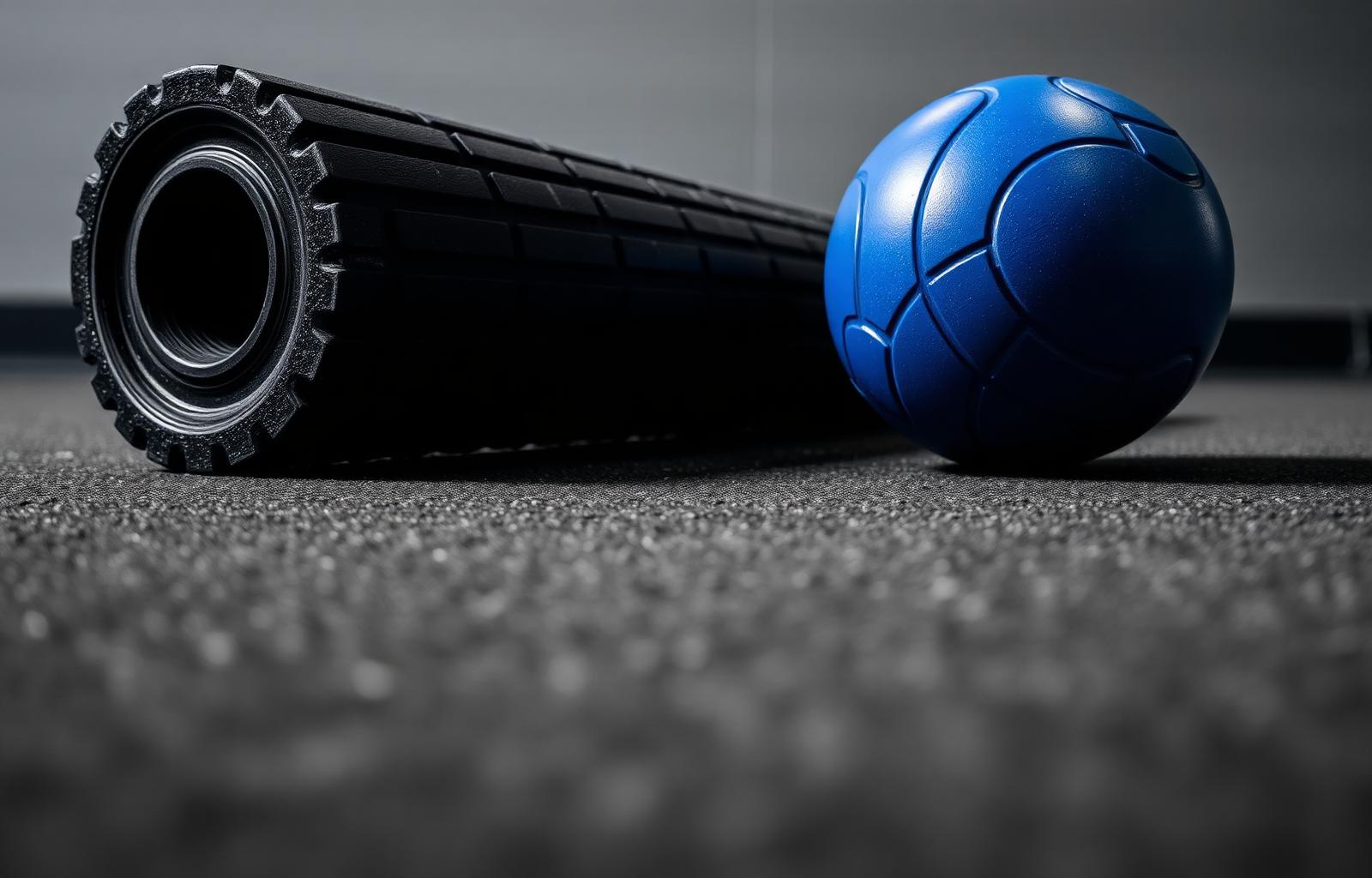
Self-myofascial release with a foam roller is one of the most commonly prescribed adjuncts in physical therapy and one of the most commonly misunderstood. The original mechanistic claim — that rolling 'breaks up' fascial adhesions — does not hold up to the forces measurable in vivo. Fascia is mechanically too tough to be deformed by body weight on a six-inch cylinder. That does not mean foam rolling is useless; it means the mechanism is different from what the marketing copy says.
What the literature actually supports
Two effects are well-replicated. First, acute foam rolling produces meaningful short-term increases in joint range of motion, typically lasting ten to thirty minutes. The magnitude is comparable to static stretching but without the temporary strength deficit that static stretching can produce, which makes it a better warm-up tool. Second, foam rolling after exercise reduces perceived delayed-onset muscle soreness and improves performance metrics in the recovery window.
The mechanism is most likely neurophysiological: pressure on tissue alters afferent input, modulates pain perception through descending inhibition, and reduces tone via gamma motor neuron downregulation. None of this requires fascial deformation. Frame foam rolling as a tool that changes how the nervous system perceives a region, not a tool that changes the region itself. Patients who understand the mechanism use the tool more consistently.
Practical programming
For warm-up, thirty to sixty seconds per target region with slow, sustained pressure on tender spots produces the most consistent ROM gain. Avoid aggressive rolling speed — slower is more effective. For recovery, the same dose applied within an hour of training is the most evidence-supported window. Daily use is fine; there is no evidence of overuse harm at typical loads, though rolling directly over bony prominences and joint lines should be avoided.
Vibrating foam rollers offer a small additional benefit on ROM and pain perception in some studies, though the effect size is modest and probably not worth the cost premium for most patients. Where they earn their keep is patient adherence: the novelty and sensory feedback often increase use frequency, and the most effective intervention is the one the patient will actually perform.
Our 2026 top picks
For general clinical use, a high-density EVA roller in the standard six-by-thirty-six configuration remains the best balance of durability, density, and price. Trigger Point GRID and RumbleRoller variants offer textured surfaces that some patients prefer for targeted work, though the textured surface adds little measurable benefit beyond user preference. For traveling clinicians, a thirteen-inch high-density roller fits in most rolling bags.
In the vibrating category, the Hyperice Vyper 3 and Therabody Wave Roller are the two products we have seen hold up to clinic-grade use across hundreds of sessions. Both offer multiple intensity settings, which matters more than peak intensity in practice — most patients use the lowest two settings. Battery life across both products is well above a typical clinic day, and both come with reasonable warranties.